Konjac Food Purchasing Guide: Practical Tips for Checking Ingredients and Distinguishing Processes
Konjac food has become a new choice for healthy diets due to its low - calorie and high - fiber properties. However, the quality of products on the market varies. Mastering the skills of ingredient analysis and process identification can help consumers accurately select high - quality products.
Checking the ingredient list is the first step in purchasing. In the ingredient list of high - quality konjac food, "konjac flour" or "konjac refined flour" should be ranked first, and its content should not be less than 50%. If the first few items in the ingredient list are wheat flour, starch, etc., it may be a konjac - flavored product with low dietary fiber content. Special attention should be paid to additives. It is better to choose products with less preservatives (such as sodium benzoate) and sweeteners (such as aspartame). In particular, children and pregnant women should avoid products containing artificial colors. In addition, the "dietary fiber" content in the nutrition list is a key indicator. An ideal product should contain more than 5 grams per 100 grams, and the energy value should be controlled within 80 kcal, truly reflecting the low - calorie advantage.
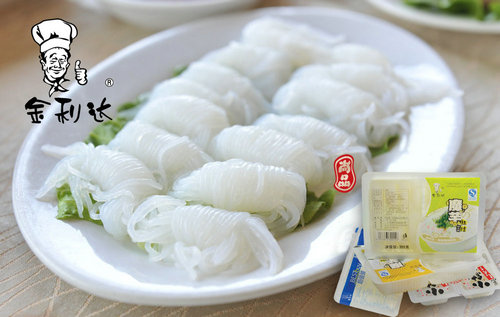
Process identification determines the taste and safety. Traditional konjac tofu adopts the "water grinding method" process. By grinding konjac tubers with a stone mill, more natural colloids are retained, and the texture is tender and chewy. When purchasing, you can observe the cut surface: the one with a fine and non - granular feel and can rebound quickly after being pressed is a high - quality product. For modern ready - to - eat konjac foods (such as konjac noodles, vegetarian tripe), attention should be paid to the sterilization process. Products marked with "high - temperature instantaneous sterilization" or "pasteurization" have a lower risk of microbial contamination during the shelf life. In addition, check the tightness of the packaging: vacuum packaging should not have air leakage or bulging, and the sealing line at the edge of bagged products should be flat without wrinkles to avoid oxidative deterioration due to poor sealing.
There are detailed skills for different categories. For semi - finished products such as konjac knots, it is necessary to check the moisture content. High - quality products should have moderate dryness and wetness, and the liquid in the bag should be clear and not turbid. For ready - to - eat konjac snacks, attention should be paid to the proportion of seasonings. Choose low - salt (sodium content ≤ 300mg/100g) and low - sugar styles to avoid covering up the quality defects of konjac itself. When buying bulk konjac products, observe the color: natural konjac food is off - white or light brown. If the color is too white, it may have been bleached; if it is too dark, the raw materials may be stale.
Finally, it is recommended to choose brand products with traceability information. Products marked with the origin of raw materials (such as high - quality konjac producing areas like Sichuan and Yunnan) and production license numbers on the packaging are more guaranteed in quality. Through the three - step method of "ingredients first, process assistance, and category segmentation", you can effectively avoid purchasing traps and buy truly healthy and high - quality konjac food.