


How to choose konjac knots? Practical techniques for assessing quality, distinguishing taste, and checking ingredients
Konjac knots have become a popular ingredient in hot pot, salad, and cold dishes due to their crispy and tender taste and low calorie advantage. However, the quality of products on the market varies greatly. Only by mastering the three skills of "looking at quality, distinguishing taste, and checking ingredients" can one choose safe and delicious konjac knots.
Quality is the first step in purchasing, with a focus on appearance and condition. High quality konjac knots are semi transparent or off white in color, with a uniform and natural appearance, and no abnormalities such as yellowing, blackening, or spots; The size of the structure is regular, the winding density of each structure is moderate, and there is no looseness, breakage, or adhesion into clusters. If severe adhesion is found in the structure, it may be due to improper moisture control during production or moisture deterioration during storage. In addition, packaging should also pay attention to: priority should be given to vacuum independent packaging, with intact packaging and no air leaks or swollen bags. The production date, shelf life, manufacturer, and SC food production license number on the label should be clear and complete to avoid purchasing "three no" bulk products.
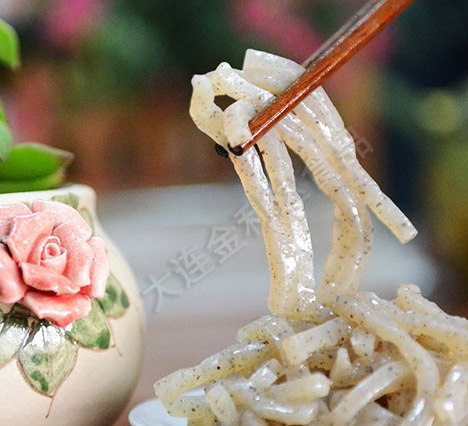
To distinguish taste, it is necessary to combine "smell" and "taste" (if allowed to taste). After unpacking, the high-quality konjac knot should only have a light fragrance of konjac, without sour, fishy, pungent essence and other odor; If there is an odor, it may be due to excessive microorganisms or the addition of inferior preservatives. When trying it out, good konjac has a crispy, tender, and elastic texture, with a clear "creaking" sensation when bitten. It does not become soft, rotten, or difficult to chew - if the taste is sticky, it may be due to prolonged storage time; If the taste is too strong, it may be due to improper mixing of konjac flour during processing or insufficient cooking (note: undercooked konjac may contain trace amounts of alkaloids and should be thoroughly heated before consumption).
Checking the ingredients is the key to determining the authenticity of konjac paste. In the ingredient list of high-quality konjac balls, "konjac flour" or "konjac flour" should be ranked first, and the higher the content, the better; Be cautious of products with "starch" (such as wheat starch and corn starch) listed at the top of the ingredient list. These products may reduce the konjac content to lower costs, resulting in a decrease in dietary fiber and an increase in calories, losing the health benefits of konjac food. At the same time, try to choose products with fewer kinds of additives, and avoid excessive consumption of essence, pigments, preservatives (such as sodium benzoate, potassium sorbate, although compliant, the less the better). Especially for sensitive people, it is necessary to carefully check whether there are allergens (such as soybeans, wheat).
By mastering these three techniques and combining them with one's own needs (such as choosing small and easy to taste dishes for cold dishes, and choosing large and durable dishes for hot pot), one can easily select high-quality konjac knots and eat them healthily and with peace of mind.


