


What is the difference between Dalian konjac vermicelli and konjac flour?
The main differences between Dalian konjac vermicelli and konjac flour are as follows:
1、 Appearance and Form
Konjac fans:
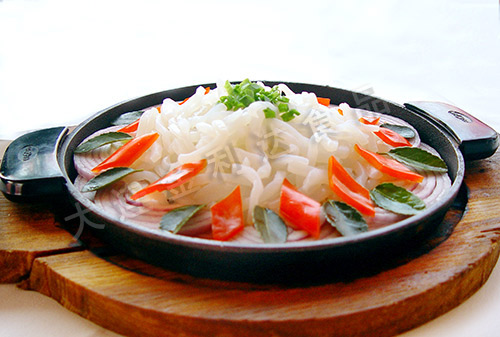
Konjac vermicelli is usually filamentous, with slender lines and a smaller diameter. Its appearance is similar to traditional fans, with distinct and smooth lines. During the production process, special techniques are used to form fine and long filaments of konjac flour, which are generally of uniform length. Some konjac vermicelli also have a certain degree of transparency.
Konjac flour:
The shape of konjac noodles is closer to traditional noodles and is generally thicker than konjac vermicelli. Its cross-section may be circular, square, or flat, and its width and thickness vary depending on the product. The overall appearance is more three-dimensional and appears thicker, with some texture on the surface to simulate the texture of real noodles.
2、 Taste Experience
Konjac fans:
The taste is quite smooth and delicate. Due to its filamentous structure, it is easy to consume and can effectively absorb soup. Every bite of konjac vermicelli feels smooth in the mouth, giving a light and airy texture. When chewing, the elasticity of konjac vermicelli is relatively weak, making it easier to bite off.
Konjac flour:
Konjac noodles have a more resilient and chewy texture due to their thicker texture. It can provide a relatively solid texture, making people feel more satiated. During the chewing process, the elasticity of konjac noodles is relatively obvious, which can better restore the taste experience of traditional noodles. However, the degree of elasticity may vary slightly depending on the brand and production process.
3、 Production process
Konjac fans:
The production of konjac vermicelli usually involves pre treating konjac flour by dissolving, stirring, etc., and then extruding or leaking it through a specific mold to form a filamentous form. In this process, it is necessary to precisely control factors such as temperature, pressure, and flow rate to ensure uniform thickness of the fans. Afterwards, it may be necessary to undergo aging, drying, and other processes to enhance the toughness and stability of the vermicelli.
Konjac flour:
The production process of konjac flour may be more complex. Usually, konjac flour is mixed with other additives (such as coagulants), stirred and kneaded to form a dough. Then, the dough is made into the shape of noodles by pressing it with a noodle press or manually rolling it out. In order to give the magic taro noodles a better taste, further processing steps such as steaming and cooling may be necessary.
4、 Cooking methods
Konjac fans:
Konjac vermicelli has a relatively short cooking time. Due to its thinness, it is easy to cook in hot water and usually only takes a few minutes. When cooking, it is more suitable for cold dishes, soup or hot pot. For example, cold mixed konjac vermicelli can be quickly blanched and mixed with various seasonings to make a refreshing cold dish; In hotpot, konjac vermicelli can absorb the flavor of the soup base and become delicious after being boiled in the pot for a while.
Konjac flour:
Konjac noodles may take slightly longer to cook due to their thicker texture. Whether boiling or stir frying, it takes more time to ensure that the inside is fully cooked. In terms of cooking application, konjac noodles can be used for boiling Noodles in soup and fried noodles, and can also be used for boiling hot pot like konjac fans, but the cooking time in hot pot will be longer than that of konjac fans to ensure the taste.
5、 Nutritional components
The main nutritional components of konjac vermicelli and konjac flour are similar:
They are mainly made from konjac and are rich in dietary fiber, especially glucomannan. This ingredient can increase satiety, reduce intake of other foods, and help promote intestinal peristalsis, improving digestive function.
However, due to the fact that some Dalian konjac noodles may add other ingredients (such as starch, protein, etc.) during the production process to improve the taste, the specific nutritional content may differ from konjac vermicelli. For example, konjac flour with added starch may have a relatively higher carbohydrate content.


